How to Use Family Genograms in Family Therapy to Improve Relationships
Family relationships are deeply shaped by patterns that often stretch back generations. Many families struggle with recurring conflicts, communication breakdowns, emotional distance, or repeated behavioral cycles without fully understanding where these patterns began. One of the most powerful tools used in family therapy to uncover these hidden dynamics is the family genogram. When used correctly, a genogram does more than map a family tree. It reveals emotional patterns, relational roles, trauma history, and intergenerational influences that affect present day relationships.
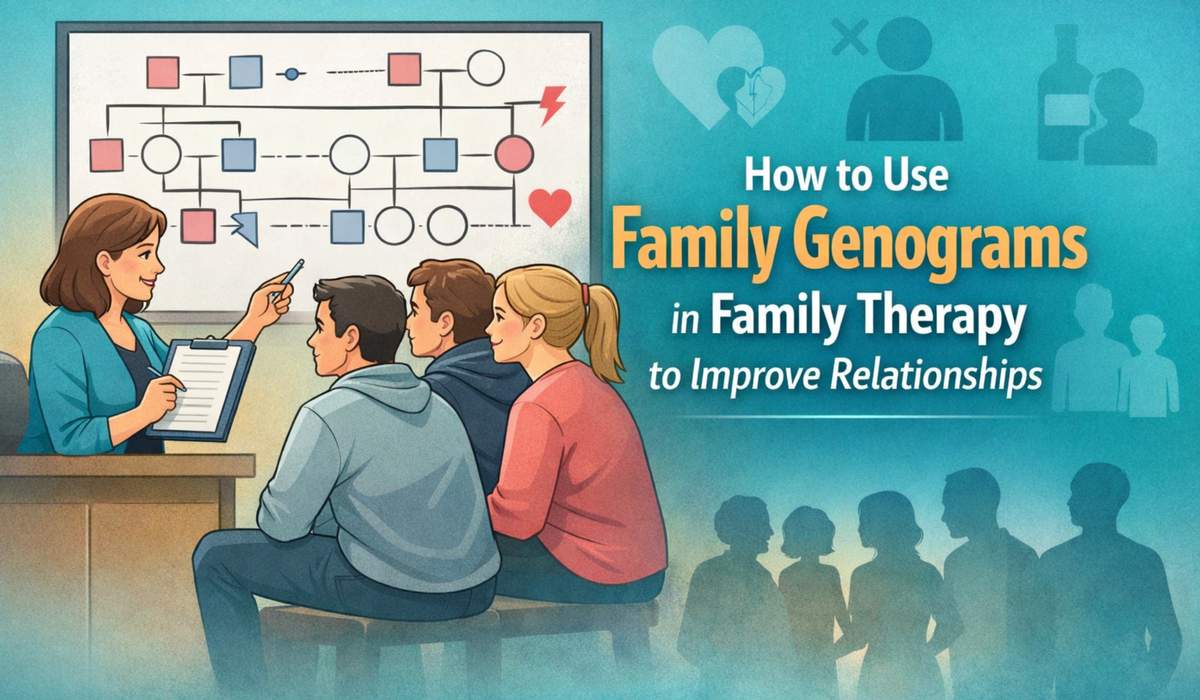 A family genogram is a visual diagram that outlines family members across multiple generations while also identifying emotional connections, conflicts, health concerns, behavioral trends, and significant life events. Unlike a basic family tree, a genogram includes deeper relational information such as divorces, estrangements, addictions, mental health concerns, alliances, and communication styles. In family therapy, this tool helps both the therapist and the family gain insight into patterns that may otherwise remain unconscious.
What Makes a Genogram Different From a Family Tree
Many online articles briefly mention that genograms are more detailed than family trees but fail to explain how that difference impacts therapy outcomes. A family tree focuses mainly on lineage. A genogram, on the other hand, highlights emotional relationships, behavioral patterns, and systemic influences.
For example, if three generations show a pattern of emotional cutoff between fathers and sons, a genogram makes that pattern visible. If anxiety or depression appears across generations, it can signal both genetic and environmental factors. This visual clarity often leads to powerful breakthroughs during therapy sessions because families begin to see their struggles in context rather than as isolated problems.
Step by Step Guide to Creating a Family Genogram in Therapy
Building a genogram should be collaborative. The process itself can open important conversations and build trust within therapy.
| Step | What to Include | Therapeutic Purpose |
|---|---|---|
| Identify Family Members | At least three generations including grandparents, parents, siblings, children | Establish generational context |
| Map Relationships | Marriages, divorces, separations, conflicts, close bonds | Reveal emotional dynamics |
| Note Significant Events | Trauma, migration, illness, addiction, financial hardship | Understand systemic stressors |
| Identify Behavioral Patterns | Communication styles, parenting approaches, coping habits | Detect recurring cycles |
| Reflect and Discuss | Client reactions and emotional responses | Promote insight and healing |
The final and most important step is reflection. A genogram is not just about collecting information. It is about helping family members interpret what they see and explore how those patterns influence their current relationships.
How Genograms Improve Relationships
One major gap in many discussions about genograms is failing to explain how insight translates into relational change. Awareness alone does not fix relationships. The therapeutic value comes from applying that awareness intentionally.
When families recognize generational communication patterns, they can consciously choose different responses. For example, if emotional suppression has been normalized for decades, therapy can introduce healthier emotional expression skills. If conflict avoidance has led to unresolved resentment, families can practice constructive dialogue techniques.
Genograms also reduce blame. Instead of viewing one member as the problem, families begin to see how systemic influences shaped behaviors. This shift encourages empathy and accountability at the same time.
Using Genograms to Address Specific Family Issues
Genograms can be especially effective when addressing common concerns within Family Therapy Services such as chronic conflict, blended family challenges, parenting struggles, or intergenerational trauma.
For families experiencing repeated arguments, mapping conflict patterns often reveals alliances or triangulation dynamics where one member is consistently placed in the middle. Recognizing this allows the therapist to restructure communication boundaries.
In cases involving anxiety, depression, or substance use, a genogram may reveal long standing coping mechanisms passed down through generations. This understanding helps families move from shame to informed healing.
When working with adolescents, genograms can highlight parenting styles inherited from previous generations. Parents may discover they are unconsciously repeating strict or emotionally distant approaches they experienced as children. Therapy then focuses on building intentional parenting strategies.
Integrating Genograms With Other Therapeutic Approaches
A genogram is not a standalone solution. It works best when integrated with structured therapeutic interventions such as communication skill building, emotional regulation training, and boundary setting exercises. During sessions at Aeon Counseling and Consulting, therapists may combine genogram exploration with guided discussions, role playing exercises, and cognitive reframing techniques to ensure insights lead to meaningful behavioral change.
In virtual sessions through Online Counseling Services, digital genogram tools can be used interactively, allowing family members to collaborate even when they are in different locations. This accessibility increases engagement and continuity of care.
Benefits of Using Family Genograms in Therapy
Using genograms within family therapy offers several important advantages.
First, they provide clarity. Visual mapping simplifies complex relational histories and makes patterns easier to understand.
Second, they promote empathy. Seeing generational trauma or emotional gaps often softens judgment between family members.
Third, they support long term change. By identifying root causes rather than surface level conflicts, therapy becomes more sustainable.
Fourth, they empower families. Clients become active participants in understanding their system instead of feeling stuck in repetitive cycles.
Finally, genograms strengthen communication. The process of discussing family history encourages open dialogue and emotional honesty.
Families who engage in this process through Aeon Counseling and Consulting often report improved emotional awareness and deeper relational understanding.
When to Consider Family Genogram Work
You may benefit from genogram focused therapy if your family experiences repeated arguments that never fully resolve, emotional distance across generations, patterns of anxiety or depression, or difficulty navigating life transitions such as divorce or remarriage. It is also valuable when individuals want to understand how childhood experiences shape adult relationships.
Professional guidance ensures the process remains supportive rather than overwhelming. Revisiting past trauma without structure can be destabilizing, which is why working with trained family therapists is essential.
FAQ
What is the main purpose of a family genogram in therapy?
The primary purpose is to identify intergenerational patterns that influence current relationships. It helps families understand how past experiences, emotional roles, and behavioral habits shape present dynamics.
How many generations should be included in a genogram?
Ideally, at least three generations should be mapped. Including grandparents, parents, and children provides enough context to identify recurring patterns and relational trends.
Can genograms be used in online therapy sessions?
Yes, genograms can be created using digital tools during virtual sessions. Therapists guide families through the same reflective process while maintaining structure and emotional safety.
Is creating a genogram emotionally difficult?
It can bring up strong emotions, especially when discussing trauma or conflict. However, with professional support, it becomes a healing experience that fosters understanding rather than distress.
How do I start family therapy using a genogram?
You can begin by contacting a licensed therapist who specializes in Family Therapy Services. During the initial assessment, the therapist will determine whether genogram work is appropriate and guide your family through the process step by step.